Sikhi
Salok Mahala 9: What Guru Tegh Bahadur Ji's Saloks Say to You in Your 20s

The saloks of Guru Tegh Bahadur Ji near the end of Guru Granth Sahib Ji speak directly to fear, attachment, and courage. An introduction for young Sikhs, and how USM's youth-led series teaches them.
Near the very end of Sri Guru Granth Sahib Ji are the Saloks of the Ninth Guru, Guru Tegh Bahadur Ji — commonly called Salok Mahala 9. Many Sikhs know them from the Bhog of a Sehaj or Akhand Paath, when they are read just before Mundavani.
They are short. They are also some of the most direct words in Gurbani about the things people in their late teens and twenties wrestle with most: fear, attachment, what lasts, and where to find strength.
This is an introduction, not a translation or a replacement for sitting with the Bani yourself, or learning from people who have studied it deeply.
Who was Guru Tegh Bahadur Ji?
Guru Tegh Bahadur Ji was the ninth Sikh Guru. He is remembered as Hind di Chadar, the shield of India, for giving his life in Delhi in 1675 to defend the freedom of others to practice their faith — people whose religion was not his own. Gurdwara Sis Ganj Sahib in Chandni Chowk marks the place of his shaheedi. The Sikh world marked the 350th anniversary of his martyrdom in 2025.
His Bani appears in Guru Granth Sahib Ji across several raags, and his saloks are gathered near the end of the Guru Granth Sahib.
The themes of Salok Mahala 9
Everything you are attached to is temporary
Again and again, the saloks point out that the body, wealth, status, and even relationships do not last forever — and that clinging to them as if they will is the root of a lot of suffering. That is not a call to stop caring. It is an invitation to hold things with open hands, and to anchor yourself in what does not change: Naam.
Fearlessness, both ways
One of the most quoted lines of the saloks describes the person of wisdom as one who "frightens no one, and is afraid of no one" (bhai kahoo ko det neh, neh bhai maanat aan).
Think about how much of college life runs on fear: fear of failing, of falling behind, of what people think, of the future. And think about how often fear makes people hurt others. The Guru's words describe a freedom from both. Given how Guru Tegh Bahadur Ji lived and gave his life, it is not an abstract idea.
Remember while there is time
The saloks carry an urgency: life passes quickly, so do not wait for "later" to remember Vaheguru. For students who keep telling themselves they will get serious about Sikhi after exams, after graduation, after the job, it is a direct message.
Strength comes from the Guru
Some of the final saloks speak of feeling that one's strength is gone and seeking refuge — and of strength returning through the Guru's support. Many people find comfort in these lines during the hardest seasons of their lives.
Why learn it from people your age?
USM's Salok Mahala 9 Series was built on a simple idea: the person teaching you should be someone who gets where you are.
Working with Sikh Dharmsal, USM trained 6 youth facilitators to lead workshops on Guru Tegh Bahadur Ji's Salok Mahala 9. The sessions are built for students — small groups, real questions, and time to talk about how these teachings apply to exams, relationships, anxiety, and ambition. The series is expanding to SSAs across the West Coast.
If you want to go deeper into Gurbani more broadly, start with USM's Sikhi 101 guide, or come to Camp Kudrat, USM's annual Sikhi retreat.
How to start reading Salok Mahala 9
- Read a few saloks at a time, not all at once. Pick one line to carry with you for the day.
- Use a reliable translation, and when you can, learn the meaning of the original words. A lot of depth is lost in English.
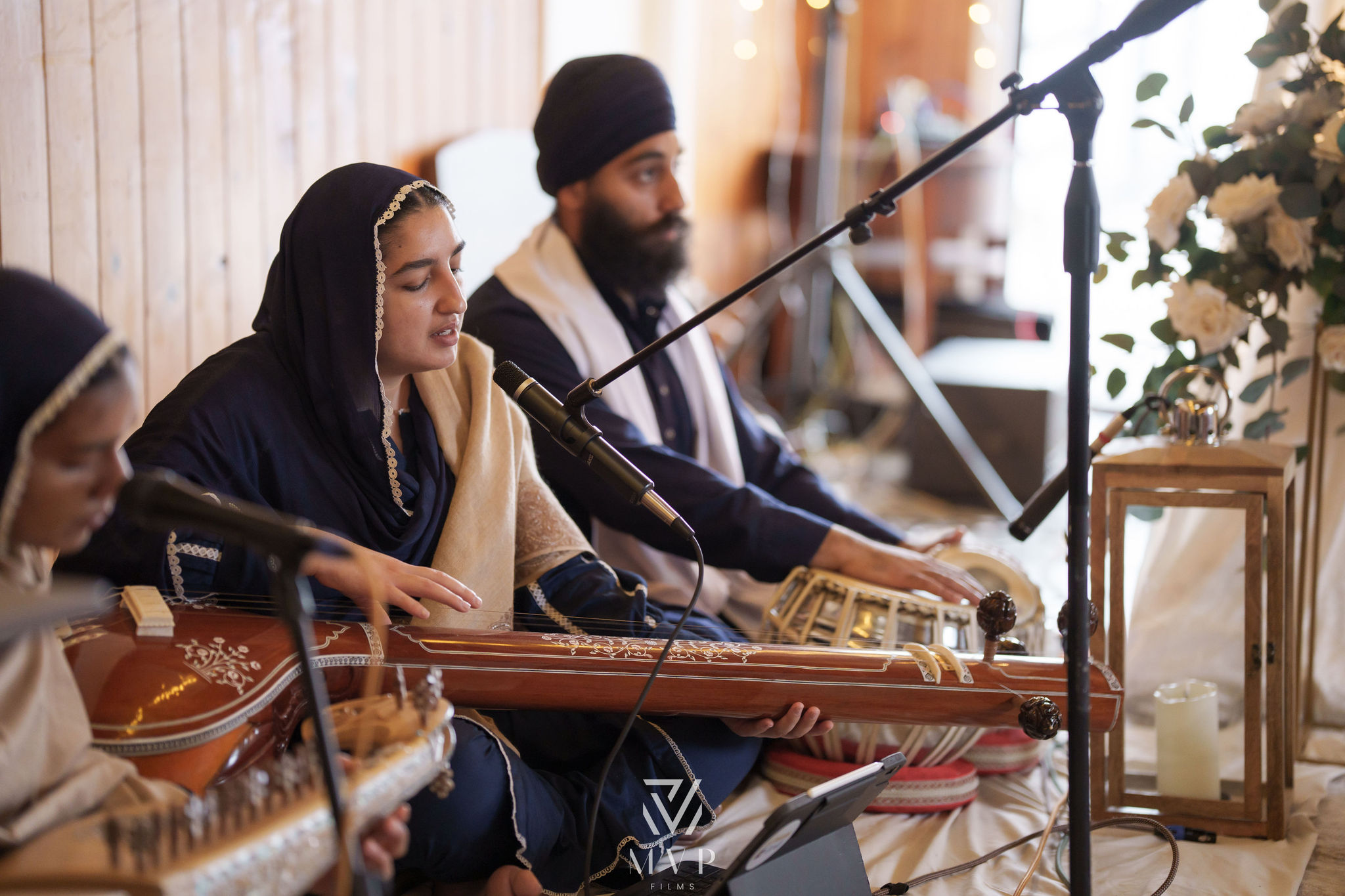
- Listen to it in kirtan or katha. Hearing Bani sung or explained brings it alive in a different way.
- Talk about it with someone. That is what sangat is for, and what the Salok Mahala 9 Series is designed to give you.